Skip to content

How UK Driveway Contractors Can Build a Steady Flow of Leads

A practical guide to turning Google searches, Google Maps visibility, social proof and fast follow-up into booked driveway and paving jobs — without relying on referrals or shared leads.

Driveway lead generation system for UK driveway contractors
TL;DR
  • UK driveway leads come from four places: organic Google search, Google Maps, Google Ads, and referrals — only the first three can be built deliberately
  • Referrals alone aren't a strategy — they're inconsistent, and shared lead platforms sell the same enquiry to 3-4 competing contractors
  • Speed of response determines most conversions: homeowners who submit a quote form are usually contacting more than one contractor at once
  • Google Business Profile with real project photos, a website structured around actual search intent, and Instagram before-and-after Reels do more for enquiries than any single tactic alone
  • See our full driveway and patio marketing approach for how these pieces connect into one system

Where Do UK Driveway Enquiries Actually Come From?

Most driveway enquiries in the UK come from four places: organic Google search, Google Maps, paid ads, and referrals — and only two of those are things you actually control long-term. Referrals are valuable but unpredictable. Everything else can be built deliberately.

  • Organic search covers homeowners typing things like "driveway installers near me," "resin driveway cost," or "block paving contractor [town]." This builds slowly but keeps working without ongoing spend once it's ranking.
  • Google Maps is where most local comparison actually happens — a homeowner narrows their shortlist to 3-4 names before visiting a single website.
  • Google Ads buys you visibility instantly for the searches that matter most, which is useful when you're new to an area or an organic ranking would take too long.
  • Referrals stay valuable, but a referral-only pipeline means good months are luck, not strategy. The businesses that grow predictably treat search and paid channels as things to actively build, not hope for.
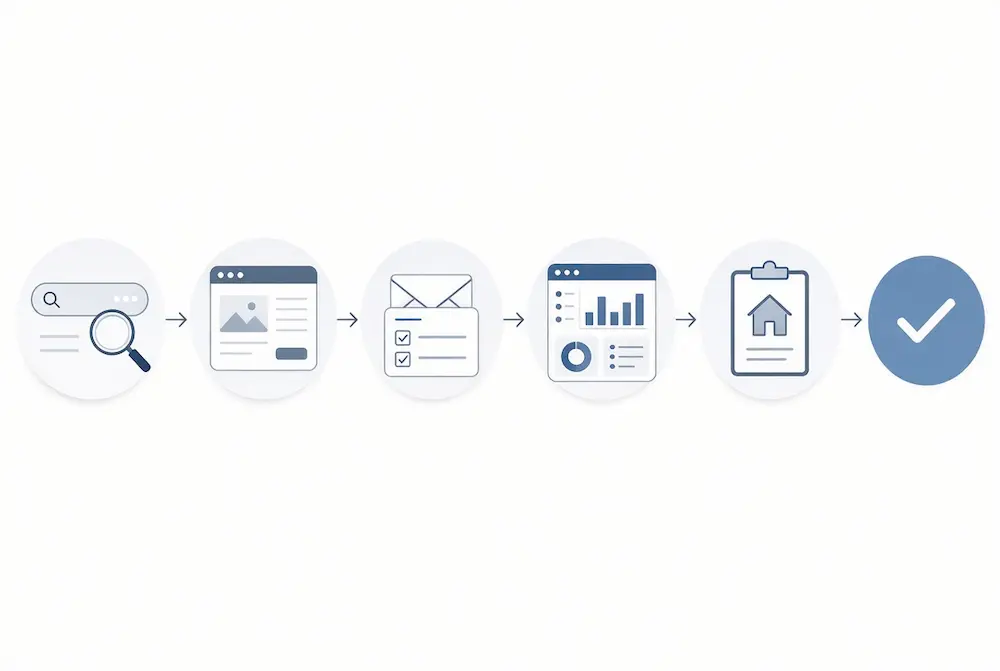
Diagram of driveway lead flow from Google search to booked job

Lead generation funnel for better return on investment. ExoraLeads

Know Your Ideal Customer Before You Spend a Penny on Marketing

Before touching your website or running an ad, get specific about who you're actually trying to reach — because "homeowners who want a driveway" is not a customer profile, it's a category.

Start with the job value you actually want more of. A £2,000 gravel drive and a £7,000 resin installation attract completely different homeowners, searching completely different terms, with completely different decision timelines. If you'd rather do fewer, bigger jobs, your content, ad targeting and even your photo selection should reflect that from the start.
Identifying the ideal customer profile for a UK driveway business

In marketing when you are selling to everyone, you are selling to no one. ExoraLeads

Then get concrete about a few things:

Property type and area — new-build estates, period properties, and rural homes each have different driveway needs and budgets. A 3-mile radius around your base often outperforms a whole county, especially for site visits and quotes.

  • Property type and area — new-build estates, period properties, and rural homes each have different driveway needs and budgets. A 3-mile radius around your base often outperforms a whole county, especially for site visits and quotes.
  • What triggers the search — an old driveway that's finally cracked, a house move, a kitchen extension that's changed the front garden, or simply wanting to sell soon and improve kerb appeal. Each trigger points to different messaging.
  • How they'll compare you — most homeowners get 2-4 quotes for driveway work. If you know that going in, your website and profile need to win that comparison, not just exist.

This isn't a branding exercise. It directly changes which keywords you target, which photos you lead with, and which platform you spend time on — which is exactly what the next few sections build on.

Build Your Website Around What Homeowners Actually Search For

The most common mistake in driveway websites is one generic page trying to rank for everything — resin, block paving, tarmac, patios, repairs — instead of giving each service room to actually answer a homeowner's questions.

A homeowner searching "resin driveway" and one searching "driveway repair" are in completely different mindsets, and Google can tell when a page is trying to serve both badly. A workable structure looks like this:

  • Driveways — Resin Driveways, Block Paving, Tarmac Driveways, Pattern Imprinted Concrete, Gravel Driveways, Natural Stone
  • Paving & Patios — Patio Installation, Garden Paving, Natural Stone Paving
  • Other Services — Driveway Repairs, Resurfacing, Replacement, Commercial Paving

Each page needs enough real content to answer what the homeowner actually wants to know — typical cost range, how long it takes, what the process involves, and photos of that specific type of work. Thin, near-identical pages that only swap a material name tend to hurt more than they help, because Google reads that pattern as low effort rather than genuine coverage.

What Different Driveway Searches Actually Mean

Not everyone searching for "driveway" is ready to book a contractor, and treating every visitor like they are wastes the traffic you've worked to get. Splitting search intent into stages helps you match the right content to the right visitor.

  • Ready to hire — "driveway contractor near me," "driveway installer [town]" — these visitors want a quote form and a phone number, fast.
  • Choosing a material — "resin driveway," "block paving driveway," "gravel driveway" — these visitors want photos, pros and cons, and rough pricing.
  • Have a problem — "driveway repair," "cracked driveway fix," "block paving repair" — often an existing driveway that's failed, and a faster decision than a fresh install.
  • Still researching — "driveway cost UK," "resin vs block paving," "how long does a driveway take" — earliest stage, but a genuine future customer if the content is useful.

You don't need to force every intent onto one page. Informational content earns the visit; the service page next to it earns the enquiry.

How Do You Turn Google Maps Into a Source of Real Enquiries?

Google Maps works as a lead source when your Google Business Profile actually shows the evidence a homeowner is looking for — real project photos, accurate service areas, and reviews that mention specific work — not just a name and a phone number.

Driveway work is visual, and a homeowner is silently asking "can this company actually do what I need?" before they ever pick up the phone. Photos of completed driveways, edging, drainage, and different property types answer that question before the call happens. A profile with 5 photos and a profile with 40 genuine project photos are not competing on equal terms, even if the underlying business is identical.

Reviews work the same way — treat them as proof, not just a ranking input. A short review that mentions "resin driveway" or "block paving" specifically does more work than a generic five stars, because it confirms to the next visitor that you've actually done the exact job they need.

If you cover more than one town, resist the urge to spin up near-identical location pages that just swap the town name — that pattern is well known to work against you rather than for you. One genuinely useful page per area, covering local project examples and real service-area detail, does more than five thin ones.

Turn Every Completed Driveway Into Marketing Content

A finished driveway shouldn't disappear into a phone camera roll. One project, shot properly, can become a project page, a Google Business Profile post, three or four social posts, and supporting content on the relevant service page — instead of one forgotten photo.

Take a resin driveway completed in Birmingham as an example. That single job can support a project write-up ("Resin Driveway Installation in Birmingham"), a before-and-after carousel for Instagram, a Google Business Profile update, and a caption that naturally reinforces both the material and the area you cover. That's far more useful than a gallery of disconnected images with no context behind them.

Social Media Marketing for Driveway Contractors: Where It Actually Works

Social media for a driveway business earns its keep as a trust and visibility layer, not a direct booking channel — homeowners rarely message Instagram to book a £4,000 job, but they will check your profile before they call the number on your van.

Where to actually spend time, in order of return for most driveway and paving businesses:

  • Instagram before-and-after Reels — the single highest-performing format for this trade. A 15-30 second clip showing the old surface, the strip-out, and the finished result gets shared far more than static photos, and it doubles as evidence for anyone who lands on your profile after a Google search.
  • Local Facebook groups — community groups for the towns you serve are where homeowners actually ask "can anyone recommend a good driveway company" — a genuine reply with a couple of project photos outperforms a paid ad in the same group most of the time.
  • Facebook Business Page — treat it as a second, photo-heavy portfolio. It's also where a homeowner will look for reviews and recent activity before trusting a quote.
  • TikTok, selectively — strip-out and lay-down time-lapses perform well organically if you're already filming for Instagram anyway. Don't build a strategy around it, but don't ignore free reach either.
  • Nextdoor — smaller reach than Facebook, but the intent is unusually high; people post there specifically because they want a local recommendation.

A simple content rhythm beats an ambitious one you'll abandon after three weeks: one before-and-after post per completed job, one short process clip per week if you're filming anyway, and a monthly repost of your best Google reviews as an image. If a platform stops producing photo-worthy jobs to post that week, skip it rather than posting filler — quality and consistency of real project content matters more than frequency.

Paid social has a place too, particularly retargeting people who've already visited your website but not enquired — that's a job for a proper Meta Ads campaign rather than boosting posts at random.

What Makes a Driveway Website Page Actually Convert?

Ranking gets someone to your page; converting is a separate job, and it comes down to whether a visitor can tell within seconds what you do, where you work, and what to do next.

Above the fold, a driveway service page needs to answer three things immediately: what you install, where you cover, and why this visitor should trust you over the next result. Then make the next step obvious — "Request a Free Quote," a click-to-call number, and a WhatsApp option all in easy reach, not buried after three scrolls of text.

Below that, show the evidence: completed projects, before-and-after photos, reviews, and a short explanation of your process. Keep the enquiry form short — name, phone, postcode, service required, and rough project details is enough. Every extra field is a reason for someone to abandon the form halfway through, especially on mobile.

Build a predictable pipeline of qualified leads for your business.

Get Better Driveways Sales

Should You Use Google Ads for Driveway Leads?

Google Ads makes sense for a driveway business when you need visibility faster than organic rankings can realistically deliver — launching in a new area, or competing for a commercial-driveway keyword that would take months to rank for organically.

The part that actually determines whether the spend works is the landing page. An ad for "resin driveway installer Birmingham" sending traffic to a generic homepage wastes most of the click; the same ad sending traffic to a resin-driveway page with Birmingham project photos converts at a completely different rate, because the page matches exactly what the person searched for.

If you're weighing this up properly, it's worth reading how we approach Google Ads for driveway and landscaping businesses — cost-per-click in this trade runs higher than almost any other, which changes how carefully the fundamentals need to be right before you spend on it.

Why Owning Your Leads Beats Buying Shared Ones

A shared lead — bought from a pay-per-lead platform — usually goes to three or four contractors at once, which means you're paying for the enquiry and still competing for the job on price and speed.

An owned lead works differently: a homeowner searches Google, finds your business, visits your site, and requests a quote directly from you. Nobody else got that same enquiry. The trade-off is time — an owned system takes longer to build than signing up for a lead platform — but it keeps producing enquiries long after you stop actively paying for them, which a shared-lead subscription never does.

We've written a full breakdown of the shared-vs-owned economics specifically for this trade — including what a shared lead typically costs versus what it's actually worth once split three ways — on our driveway and patio marketing page.

Why Do Enquiries Go Cold After the Form Is Submitted?

Enquiries go cold because the homeowner has usually contacted more than one contractor, and whoever replies first tends to win the job regardless of price — speed of response is one of the most well-documented factors in whether an enquiry converts at all.

Research into lead response across service businesses consistently finds the same pattern: contacting a new enquiry within minutes rather than hours dramatically increases the chance of actually reaching and qualifying that person, and the odds keep dropping the longer it sits unanswered. For a driveway business, that usually means the homeowner has already spoken to someone else by the time a form submission gets noticed in an inbox the next morning.

A workable process looks like this: enquiry submitted → instant confirmation → notification to you or your team → a real follow-up call or message within the hour, not the day → site visit booked → quote sent → a scheduled follow-up if you don't hear back. This is where a proper CRM and automated follow-up setup earns its cost back quickly — it's rarely the marketing that's the weak point, it's what happens in the 24 hours after someone fills in a form.

A 90-Day Plan to Build Your Driveway Lead Generation System

You don't need to do everything in month one. A realistic rollout looks like this:

  • Days 1-30 — Foundation. Website conversion review, Google Business Profile optimisation, service page structure, enquiry form and WhatsApp/call setup, and a simple system for collecting project photos and reviews as jobs finish.
  • Days 31-60 — Visibility. Build out service and local pages properly, start posting consistently on Google Business Profile and Instagram, and push for reviews on every completed job rather than occasionally.
  • Days 61-90 — Accelerate. Layer in Google Ads on the searches that matter most, connect a proper CRM so no enquiry sits unanswered, and start tracking which channel is actually producing booked jobs, not just clicks.

How Do You Know If Your Marketing Is Actually Working?

Rankings and traffic are progress indicators, not the actual goal — the number that matters is booked jobs, and everything else should be tracked as a step toward that.

Metric

What it tells you

Google Maps visibility

Local search presence

Website enquiries

Whether visitors convert

Phone calls / WhatsApp messages

Direct buying intent

Quote requests

Sales opportunities in the pipeline

Site surveys booked

Progress toward a sale

Jobs won

The actual business outcome

Cost per qualified lead

Whether the spend is working

"We got more impressions" is a fine thing to know. "We had 27 qualified enquiries, 14 site surveys, and 6 booked driveway jobs this month" is what actually tells you whether the system is working.

Getting Started

If nobody can find you online, the problem is visibility — search, Google Maps, and possibly ads. If people find you but don't enquire, it's a website and trust problem. If enquiries come in but don't turn into jobs, it's speed and follow-up, not marketing. Most driveway businesses have one of these three broken, not all three — worth figuring out which before spending on anything new.

Referrals will always play a part in this trade, and that's fine. But a business that only grows on word of mouth is a business that can't plan its next quarter. Building search visibility, a website that converts, and a follow-up process that doesn't lose leads turns "hoping for a good month" into something closer to a system.

Want a clear look at where your driveway business is actually losing enquiries? DM AUDIT or request a free driveway lead generation audit and we'll show you exactly where the gaps are.

Ready to get started?

Build a predictable pipeline of qualified leads for your business.

Book Free Consultation for Landscaping, Patios

What Birmingham Driveway Contractors Ask Us About Getting More Leads

The question we hear most from Birmingham driveway and paving businesses isn't "does SEO work," it's "how do I actually know it's worth the money." That's fair. If you're spending £750-£2,000+ a month, you want to see it turning into site surveys and booked jobs, not just better rankings on paper. The honest answer depends on your current visibility, how competitive your specific areas are (Edgbaston and the wider Birmingham market are busier than most), and how many of those searches you're missing entirely right now. The easiest way to get a real number instead of a guess is to book a free consultation with one of our local SEO experts — we'll look at your actual Google Business Profile and search visibility and tell you honestly what kind of return you should expect before you spend anything.
How can I get more driveway leads?
Driveway contractors can generate more enquiries by improving Google visibility, Google Maps presence, service pages, project content, reviews, Google Ads and website conversion. The important part is connecting these channels to a process that captures and follows up with every enquiry.
What is the best marketing strategy for a driveway company?
There is no single channel that works for every business. A strong strategy usually combines local SEO, Google Business Profile optimisation, a conversion-focused website, relevant service pages, project content, paid search where appropriate and structured lead follow-up.
Does SEO work for driveway contractors?
Yes, SEO can help driveway contractors become visible when homeowners search for relevant services and locations. The strongest strategy focuses on commercially relevant searches, useful service pages, local visibility and evidence of real work rather than simply adding keywords to a website.
How do driveway companies get customers from Google?
Customers can discover driveway companies through organic search results, Google Maps and Google Ads. The website and Google Business Profile then need to provide enough trust and clear contact options to turn that visibility into enquiries.
How can I get my driveway business into Google Maps?
A driveway business should have an accurate and properly managed Google Business Profile with appropriate business information, services, photographs, reviews and genuine service-area information. Local visibility also depends on the wider relevance and authority of the business online.
Should a driveway contractor use Google Ads?
Google Ads can be useful when a contractor wants to generate visibility for high-intent searches without waiting for organic rankings. Campaigns should be connected to relevant landing pages and proper conversion tracking so the business can measure the quality and cost of enquiries.
What keywords should a driveway company target?
Keywords should reflect the services, locations and problems the business actually serves. Examples include driveway contractors, driveway installers, block paving, resin driveways, tarmac driveways, patio installation, driveway repairs and relevant location-based searches.
How important are reviews for driveway contractors?
Reviews are important both for reputation and conversion. Homeowners are making a significant purchase and often compare several contractors. Genuine customer feedback can help establish trust before someone requests a quotation.
Is buying shared driveway leads better than generating my own?
Shared leads can provide enquiries quickly, but the same enquiry may be sent to multiple contractors. Building your own inbound system through search, Maps, advertising and your website gives you greater control over the customer journey and creates a long-term marketing asset.
How long does driveway SEO take?
SEO is a long-term acquisition channel and results vary depending on competition, location, website authority, technical quality and the quality of the work being published. Contractors should evaluate progress through visibility, enquiries and qualified opportunities rather than expecting instant results.

Comments

Leave a comment

0/1200